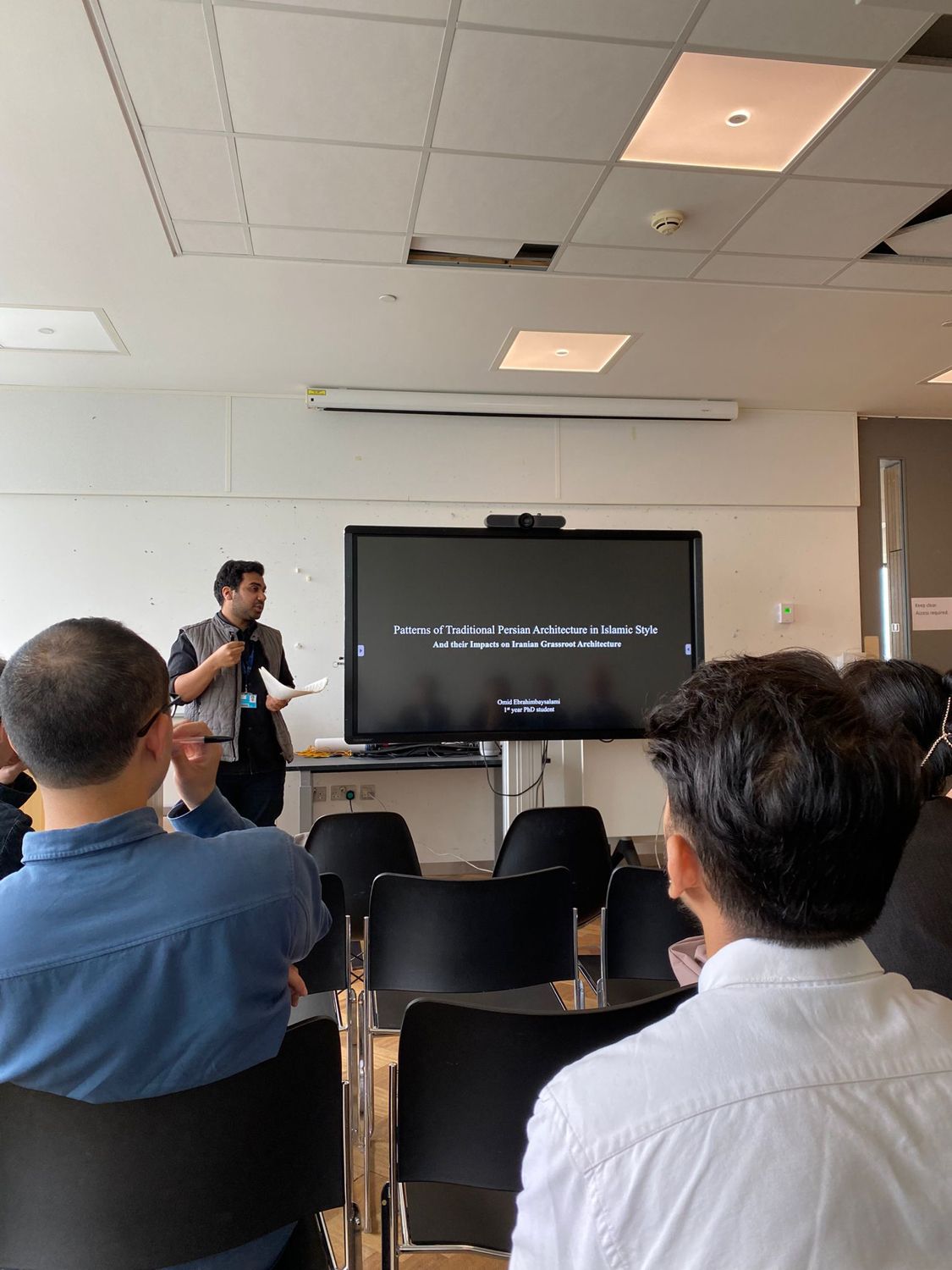
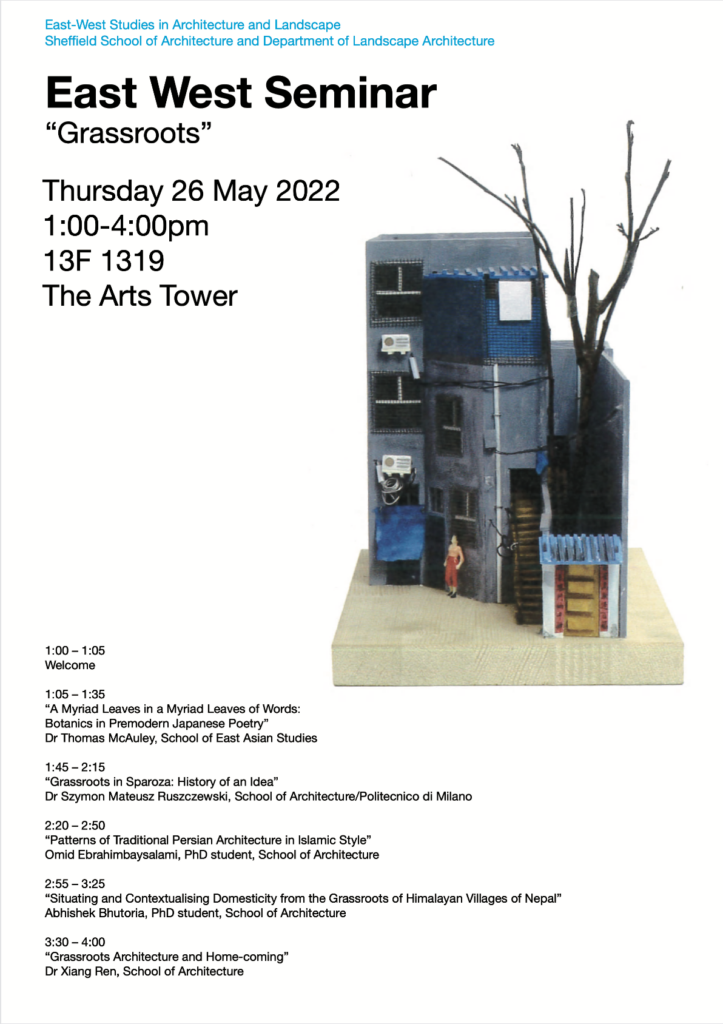
East-West Seminar
University of Sheffield, UK, 2022
Title: Patterns of Traditional Persian Architecture in Islamic Style And their Impacts on Iranian Grassroot Architecture
Traditional Persian architecture in the Islamic style is more than a historical building tradition; it is a rich visual and cultural language that has shaped the identity of Iranian architecture for centuries. Its patterns are evident in spatial harmony, geometric order, courtyards, arches, domes, iwans, and intricate decorative elements that combine beauty and meaning. These features were created not only for aesthetic pleasure, but also to reflect spiritual values, climate awareness, and social life. Thus, Persian Islamic architecture offered a design philosophy in which form, function, and symbolism worked together to create spaces that were both practical and inspiring.
The influence of these architectural patterns is also found in Iranian vernacular architecture, particularly in the way ordinary homes and local buildings adapted grand ideas to everyday life. Many vernacular structures adopted principles such as inward-looking courtyards, natural ventilation, privacy, and balanced proportions from more formal architectural traditions. This demonstrates that the legacy of Persian Islamic architecture was not confined to palaces, mosques, or monuments, but became part of the architectural culture of communities across Iran. Studying this relationship helps us understand how traditional design values continued to shape local building practices and why these patterns remain important in discussions of architecture, heritage, and identity today.