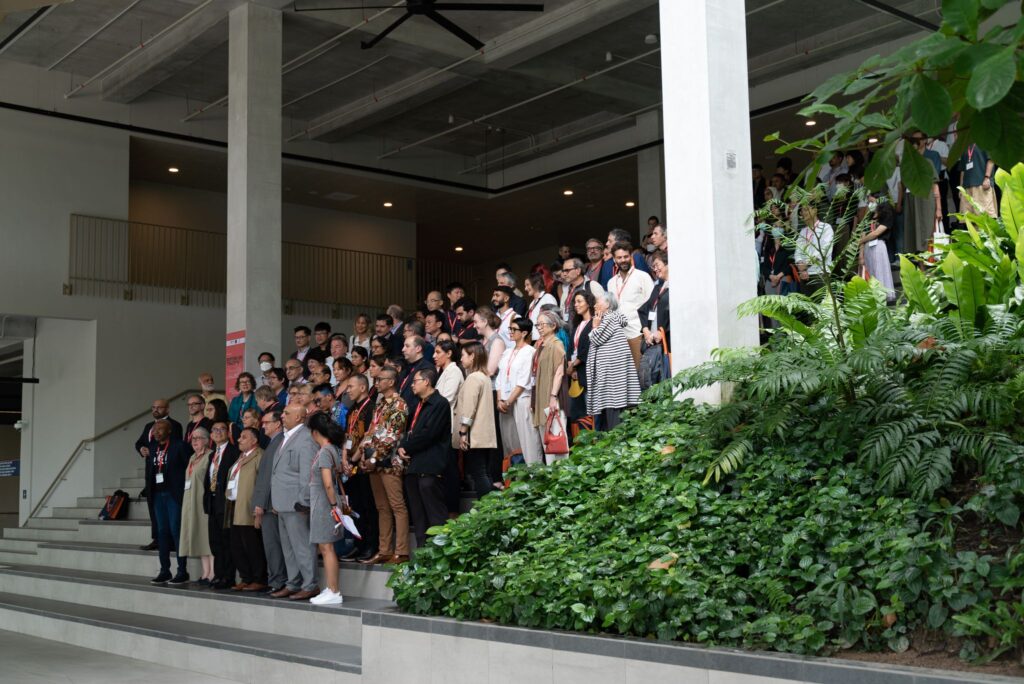
IASTE Conference
National University of Singapore, 2022
Title: Revival of Tradition in Contemporary Architecture-A Case Study in Iran
I participated in the conference “Rupture and Tradition: Disruption, Continuity, Repercussions” with a paper and presentation entitled “Revival of Tradition in Contemporary Architecture: A Case Study in Iran.” My contribution addressed a central tension in contemporary architecture: the conflict between rapid modernisation and the continuity of local architectural traditions. Focusing on Iran, the presentation examined how vernacular architecture has increasingly been replaced by modern construction methods that often fail to respond adequately to regional culture, environmental conditions, or social patterns.
The paper argued that, although technological and industrial progress has changed the needs of new generations, vernacular architecture should not be regarded as outdated or irrelevant. Instead, the real issue lies in the widespread adoption of inaccurate contemporary approaches that overlook the knowledge embedded in traditional building forms. In many developing contexts such as Iran, this has led to a weakening of architectural identity and a growing separation between built environments and the cultural landscapes to which they belong.
Using an anthropological approach and a case study from Khorasan Razavi province, the research investigated the reasons behind this transformation and considered the consequences of neglecting vernacular traditions. The study demonstrated that traditional architecture still contains valuable social, climatic, and spatial principles that can inform present-day design. Rather than treating tradition as something frozen in the past, the paper emphasised its potential to remain active and meaningful within contemporary architectural thinking.
A key outcome of the research was the proposal of a new concept: the architectural sub-pattern. This idea was introduced as a means of reviving confidence in vernacular architecture and reconnecting the past with the present and future of design. By identifying and reinterpreting essential traditional patterns, the study suggested a more grounded approach to contemporary architecture in Iran, one that balances modern demands with cultural continuity, environmental intelligence, and a stronger sense of place.