East-West Seminar
University of Sheffield, UK, 2026
Title: Modern Architectural Heritage in Iran before the Islamic Revolution
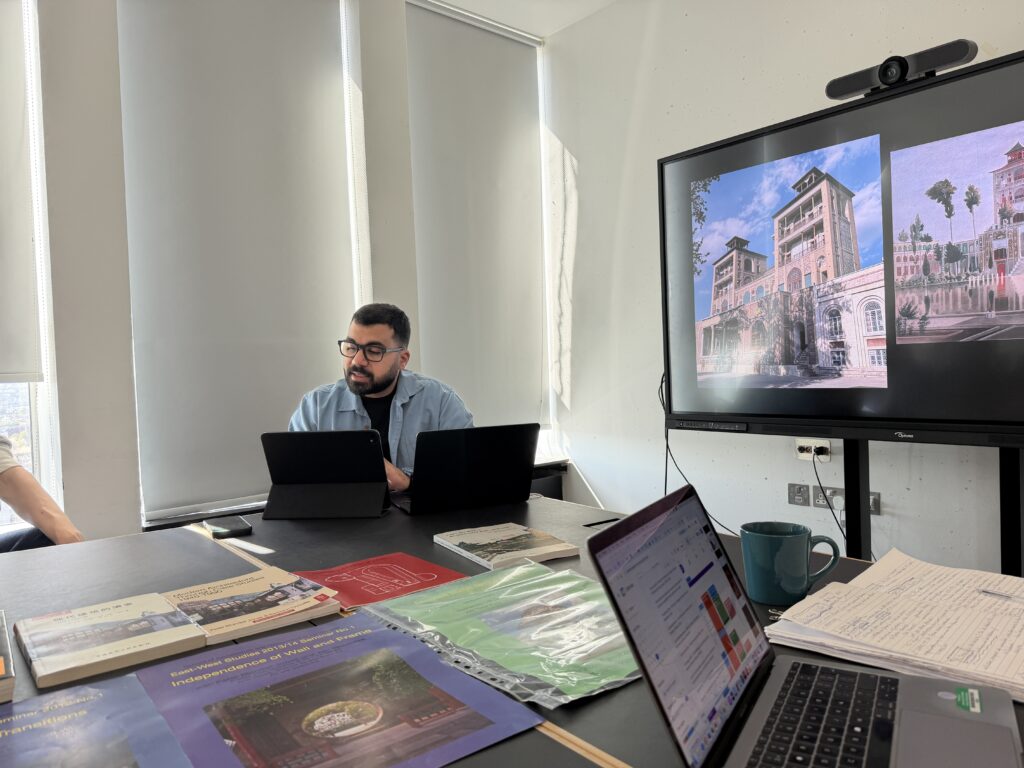
My presentation examined the transformation of modern architecture in Iran before the Islamic Revolution, focusing on the late Qajar period and the First and Second Pahlavi eras. It began with Dar ul-Funun and Shams-ol-Emareh, showing how architecture in the late Qajar period started to reflect new technologies, educational reforms, and European influences, while still maintaining connections to traditional Iranian forms. This period also marked the start of Tehran’s transformation from a historic royal city into a more modern capital.
The presentation then explored the First Pahlavi period through the National Museum of Iran, highlighting how architecture became closely linked to modernisation, nationalism, and the creation of new cultural institutions. Alongside these architectural changes, Tehran underwent major urban transformation, with new streets, public buildings, and planning strategies reshaping the city’s historic fabric.
In the Second Pahlavi period, the presentation focused on the works of Houshang Seyhoun and key projects such as the Shahyad Monument, Tehran City Theatre, and the Tehran Museum of Contemporary Art. These examples demonstrated how modern architecture in Iran became more experimental, combining international modernist ideas with Iranian identity, historical references, and cultural ambition. Across all three periods, the presentation also traced the urban expansion of Tehran, showing how the city became a central stage for architectural modernisation before 1979.