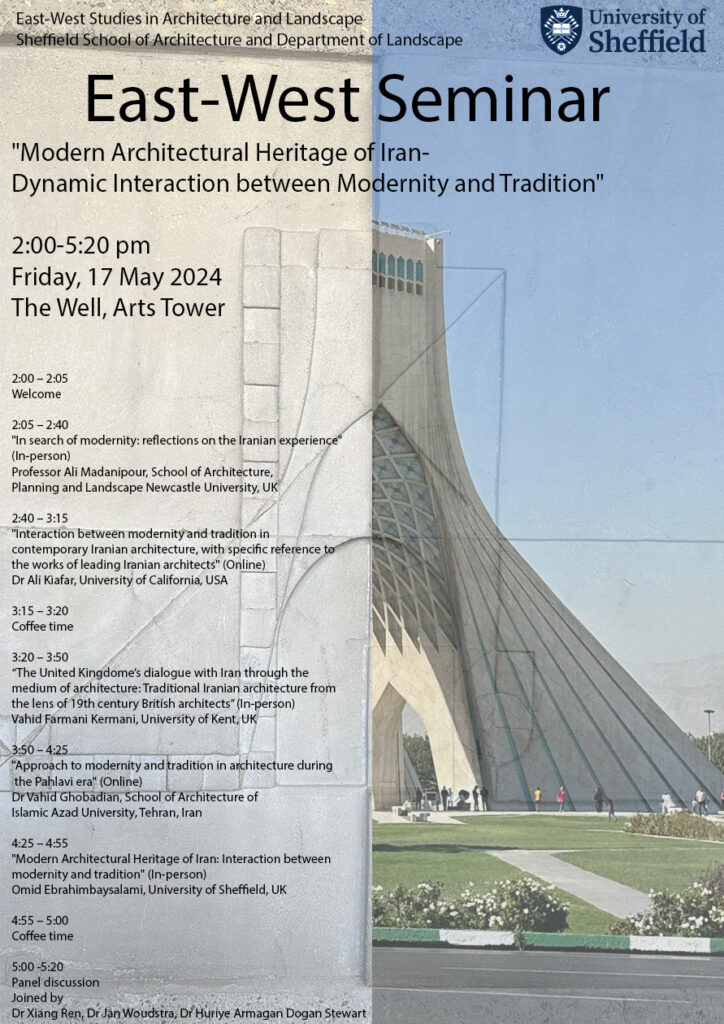
East-West Seminar
University of Sheffield, 2024
Title: Modern Architectural Heritage of Iran: Interaction between modernity and tradition
I recently organised a seminar titled “Modern Architectural Heritage of Iran: Dynamic Interaction between Modernity and Tradition,” which brought together scholars and researchers to explore the complex relationship between architectural modernity and historical continuity in Iran. The seminar provided a platform to discuss how Iranian architecture has responded to modern ideas while remaining deeply connected to its cultural, historical, and aesthetic roots. By organising this event, I aimed to foster a richer academic conversation about the ways in which architecture in Iran reflects both transformation and tradition.
The seminar featured distinguished Iranian professors, including Dr Ali Madanipour, Dr Ali Kiafar, and Dr Vahid Ghobadian, whose contributions offered important perspectives on Iranian modernity, contemporary architectural thought, and the architectural developments of the Pahlavi era. Their presence greatly enriched the intellectual quality of the seminar and provided a strong foundation for discussion. The event also included invited researchers whose work complemented the theme, helping to build a dialogue between established academic voices and ongoing scholarly research.
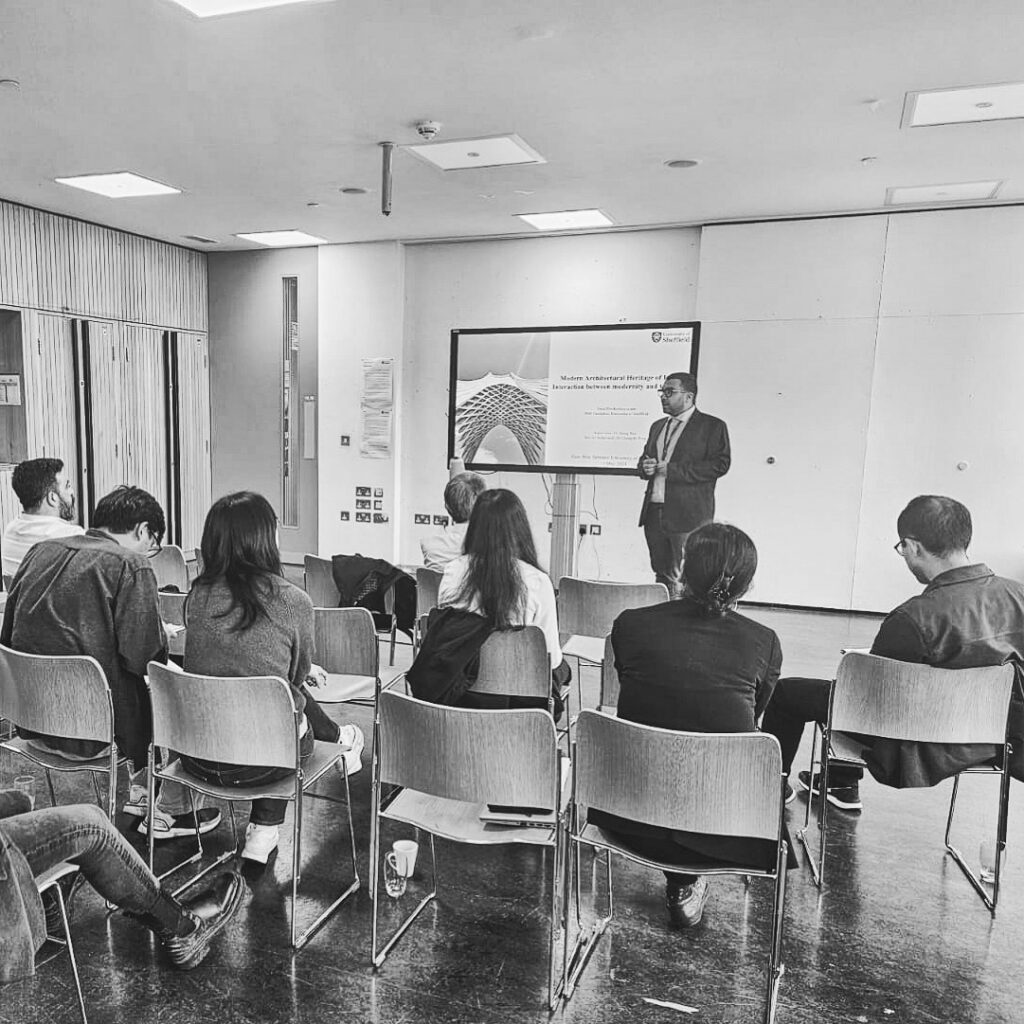
My own presentation, titled “Modern Architectural Heritage of Iran: Interaction between Modernity and Tradition,” focused on the Shahyad Monument, now known as the Azadi Tower, as a case study. I examined how this iconic monument represents a powerful architectural synthesis of modern design and traditional Iranian forms. The Azadi Tower stands as one of the clearest examples of how modern Iranian architecture did not simply adopt international modernism, but instead reinterpreted inherited architectural language in a new national and cultural context.
Through this case study, I argued that the modern architectural heritage of Iran should be understood as the result of a dynamic exchange rather than a sharp break between past and present. The Azadi Tower illustrates how architecture can embody both innovation and memory, combining symbolic meaning, national identity, and formal references to Persian architectural traditions. Overall, the seminar highlighted the importance of studying Iran’s modern architectural heritage not only as a record of changing design practices, but also as an ongoing conversation between modernity and tradition.